Dr Thomas Richardson
2022
Background
Improving Access to Psychological Therapies (IAPT) is a therapy service available through England’s National Health Service (NHS) for people anxiety and depression. However, a recent UK survey showed that only 15% of people with Bipolar Disorder (BD) had ever been offered therapy by an IAPT service (Bipolar UK, 2022). It is thought that there are many people with BD mistakenly diagnosed as depressed. This study aimed to look at the number of people with possible BD who have been referred to IAPT services, and what symptoms they experience.
Methods
371 people were assessed before they entered IAPT services using The Mini-International Neuropsychiatric Interview (MINI). Participants were categorised into groups, where symptoms indicated they had BD type-I (BD-I; with mainly manic symptoms and) or type-II (BD-II; mainly depressed symptoms with some low level or brief manic symptoms, depression, or displayed some symptoms of BD but did not have enough symptoms to be given a clear diagnosis (referred to here as BSp).The number of people who received therapy, the number of sessions, type of therapy, and responses to therapy were then collected. Any changes in symptoms assessed at the last therapy session attended.
Results
30% of participants were thought to have a BD (10% BD-I, 20% BD-II). Interestingly, 40% were thought to be BSp, whereas only 25% had depression and 5% were thought to have another disorder.
Overall, BD and depressed participants were similar in terms of age, gender, and ethnicity, but people with suspected BD experienced more complicated symptoms. They also had more experiences of psychosis and childhood trauma. All three ‘bipolar’ groups had particularly high rates of anxiety disorders. Engagement with therapy, and changes in symptoms were similar in BD and depressed groups.
Conclusion
The research showed that there are a high number of people BD in groups of people who are initially diagnosed as having anxiety and depression. National clinical guidelines say that people with BD should have access to IAPT, but this is not commonly offered. As there are not many differences in how people with suspected BD or depression engage or respond to IAPT services, these therapies appear to be well suited to also support people with BD.
More from Thomas

Dr Thomas was recently awarded the 2023 BABCP Engagement & Involvement Award. This prestigious award is indicative of his many public engagement events from his teaching, research and personal experience of bipolar.
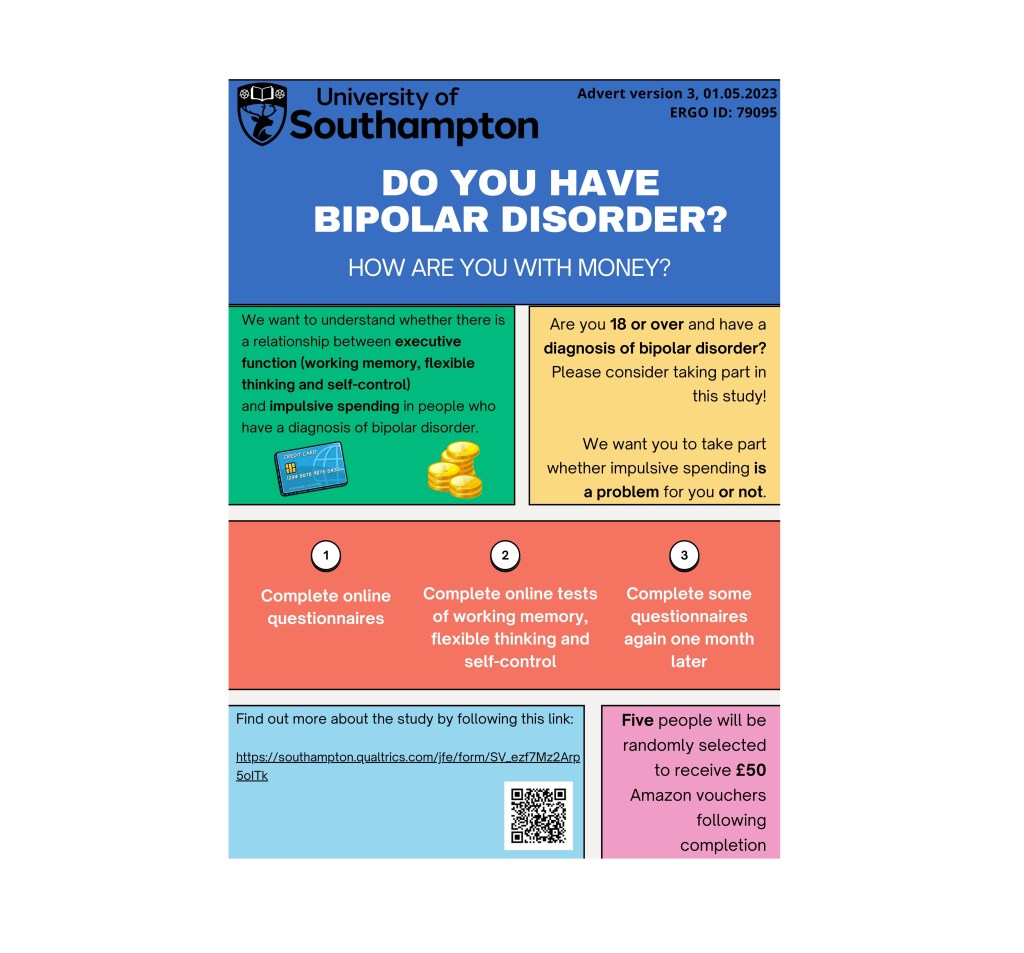
Want to take part in some upcoming research?
 SPRING
Leave a comment